 how-to
How Much Chalk Paint for Furniture? A Practical Guide
Last Updated: November 1, 2026
Quick Summary
Most furniture needs two thin coats of chalk paint, so estimate the total square footage of every painted surface, multiply by two coats, and add 10 to 15 percent for waste. A standard dresser usually needs a quart or more, depending on its size. Dark pieces covered with light paint may need a third coat.
- Measure height and width of every flat surface, then convert total square inches to square feet by dividing by 144.
- Multiply your total square footage by the number of coats, usually two for most furniture.
- Add 10 to 15 percent to cover brush loading, drips, and touch-ups.
- Porous or rough wood and carved or turned details need extra paint beyond the flat-surface measurement.
- Dark wood under a light color usually needs one extra coat for solid, even coverage.
Table of Contents
- Why Chalk Paint Quantity Is Hard to Guess
- Chalk Paint Coverage per Can and What It Means for Your Project
- Estimating Paint for Your Furniture by Surface Area
- How Many Coats of Chalk Paint Furniture Needs
- Annie Sloan Chalk Paint Coverage: What to Expect
- Adjusting Your Estimate for Texture, Shape and Existing Finish
- Buying the Right Amount and Using Leftover Paint
- Frequently Asked Questions
Why Chalk Paint Quantity Is Hard to Guess
Buying chalk paint is easy. Knowing how much to buy is where most projects go sideways.
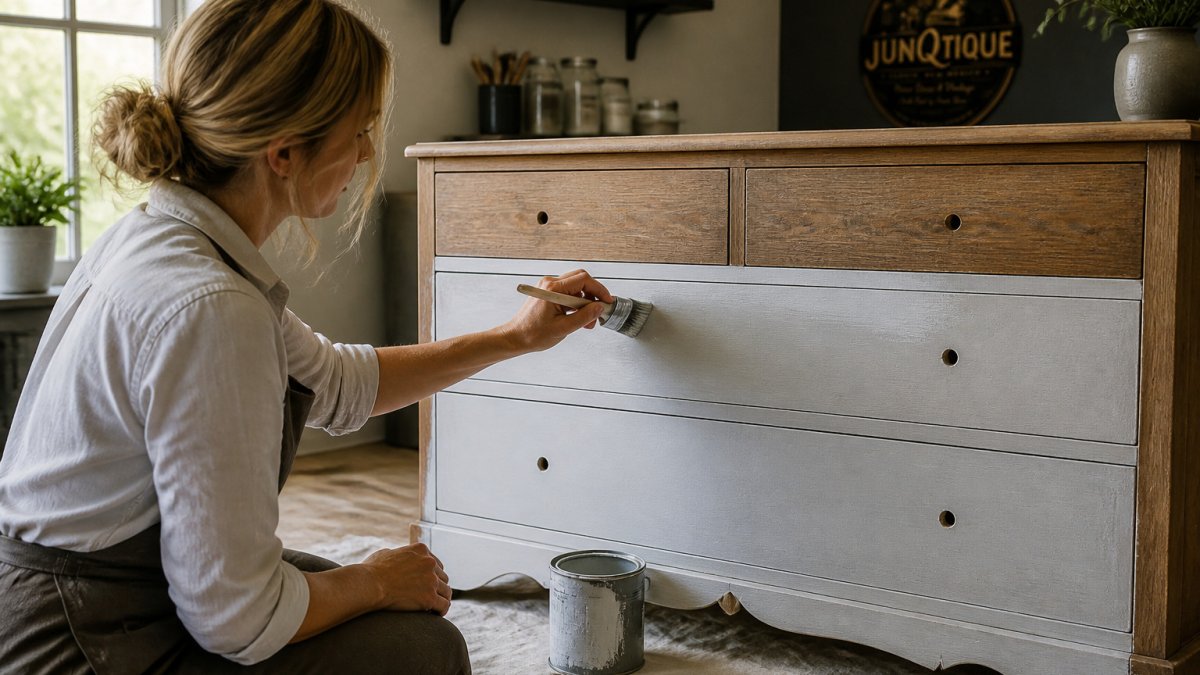
The honest answer is that no single number works for every piece. Coverage depends on the size of the furniture, the shape of the surface, how thick you paint, and how many coats you need.
That said, you can get close with a simple method. Measure the surfaces, estimate coats, and add a small margin. The sections below walk through that process step by step.
Chalk Paint Coverage per Can and What It Means for Your Project
Chalk paint coverage is usually listed per container size. Coverage figures are a starting point, not a promise. Real results shift with the surface, the brush, and how much you dilute the paint.
Keep these points in mind:
- Labels describe coverage for one coat on a smooth, unfinished surface
- Rough or porous wood soaks up more paint
- Thin coats stretch further, but may need extra coats for solid color
Think of the container size as your budget, not your full answer. Once you know the surface area you need to cover, you can match it to the container that fits.
Estimating Paint for Your Furniture by Surface Area
Most guides stop at "measure your furniture." This section gives you a repeatable calculator you can run for any piece, plus worked examples for the four most common projects so you can sanity-check your own numbers.
The surface-area calculator method
- List every painted surface. Top, front, back, both sides, drawer fronts, doors, legs, and any visible interior such as drawer boxes or cabinet interiors.
- Measure height and width in inches for each flat surface.
- Multiply height by width to get square inches per surface.
- Add all surfaces together.
- Divide by 144 to convert square inches to square feet.
- Multiply by your coat count (see the coat guidance below).
- Add 10 to 15 percent for brush loading, drips, and touch-ups.
For curved or turned parts, wrap a soft tape measure around the circumference and multiply by the length, or estimate the part as a cylinder (circumference x height) and add it to your total.
One coat versus two coats: a side-by-side estimate
The keyword question is really about total quantity, and coat count is the biggest swing factor. Here is how the same piece changes with each coat plan:
| Piece | Flat surface area | One coat | Two coats | Two coats + 15% waste |
|---|---|---|---|---|
| Nightstand (24"W x 18"D x 26"H) | ~18 sq ft | ~18 sq ft | ~36 sq ft | ~41 sq ft |
| Six-drawer dresser (36"W x 18"D x 34"H) | ~32.5 sq ft | ~32.5 sq ft | ~65 sq ft | ~75 sq ft |
| Dining table (60"L x 36"W x 30"H, top + apron + 4 legs) | ~28 sq ft | ~28 sq ft | ~56 sq ft | ~64 sq ft |
| Side chair (seat, back, 4 turned legs) | ~6.6 sq ft | ~6.6 sq ft | ~13.2 sq ft | ~15 sq ft |
Use the one-coat column only when you are refreshing a similar color over a similar color. For any color change, plan on the two-coat column plus waste.
Worked example: how much chalk paint for a dresser
Take a standard six-drawer dresser roughly 36 inches wide, 18 inches deep, and 34 inches tall.
- Top: 36 x 18 = 648 square inches
- Front and back: 2 x (36 x 34) = 2,448 square inches
- Two sides: 2 x (18 x 34) = 1,224 square inches
Total: about 4,680 square inches, or roughly 32.5 square feet. For two coats, plan for about 65 square feet of coverage, then add the waste margin for about 75 square feet. Compare that figure to your container's coverage label, and you will know whether one larger tin or two smaller ones makes sense.
Worked example: how much chalk paint for a table
A 60-inch by 36-inch dining table has a top of 2,160 square inches (15 square feet). Add the apron (roughly 60 + 36 + 60 + 36 = 192 linear inches x 4 inches tall = 768 square inches, or about 5.3 square feet) and four legs (about 2 square feet each, or 8 square feet total). That is roughly 28 square feet of surface.
Worked example: how much chalk paint for a chair
A side chair with a flat seat and back (about 4 square feet) plus turned legs and stretchers (about 2 square feet of detail area) totals about 6.6 square feet per coat. Two coats plus waste is about 15 square feet, which is why a single sample pot often falls short on a chair with turned legs.
Worked example: how much chalk paint for a cabinet
A 30-inch-wide, 12-inch-deep, 36-inch-tall wall cabinet has a front, two sides, top, bottom, and interior shelves. Measure the face frame and doors (about 15 square feet), the sides and top (about 12 square feet), and the interior (about 10 square feet) for roughly 37 square feet. Two coats plus waste is about 85 square feet, so plan on a larger container for a full cabinet interior and exterior.
Everyone's furniture is different, so measure your own piece rather than relying on these examples. The numbers above are starting points, not substitutes for your tape measure.
How Many Coats of Chalk Paint Furniture Needs
Most projects need two thin coats for even color. Two to three thin coats are commonly recommended for furniture chalk paint, and a first coat can look streaky, so do not judge the finish too early.
Use this rough guide:
- One coat: Works for a light color over a light, similar piece
- Two coats: The standard choice for most furniture
- Three coats: Often needed when a dark piece is covered with white or off-white
Thin coats beat thick ones. A thick coat takes longer to dry, can drip, and uses more paint. Let each coat dry fully before adding the next.
Watch out: Skipping the second coat to save paint often leaves uneven patches that show up after the topcoat goes on.
To get a smooth finish with less streaking, brush in long strokes and avoid going back over areas that are already tacky. Learn how to stop chalk paint from looking streaky.
Annie Sloan Chalk Paint Coverage: What to Expect
Annie Sloan Chalk Paint® is a popular choice among DIYers, and following its official instructions gives you the most predictable results. For the textured, vintage finish this paint is known for, a medium round brush is a good match.
Coverage follows the same logic as any chalk paint. Pair it with the Annie Sloan Small Flat Brush for finishing edges and detail areas. Browse the Annie Sloan Large Roller that suits covering flat furniture surfaces efficiently.
Adjusting Your Estimate for Texture, Shape and Existing Finish
The label coverage figure assumes a smooth, non-porous surface painted in one thin coat. Real furniture rarely matches that. Use the multipliers below to turn your measured square footage into a realistic paint budget. Start with your flat-surface total, then apply the factors that match your piece.
Coverage multipliers by surface condition
| Surface condition | Multiplier | Why it changes the math |
|---|---|---|
| Smooth, sealed, light-colored | 1.0x | Closest to the label estimate |
| Open-grain or porous wood | 1.15x to 1.25x | The first coat soaks in unevenly, so more paint disappears into the grain |
| Rough-sawn or weathered surface | 1.25x to 1.35x | Texture creates more surface area than the flat measurement suggests |
| Carved, turned, or ornate details | 1.2x to 1.4x on detail areas | Spindles, fluting, and recesses hold paint and are hard to cover evenly |
| Dark wood under a light color | Add one full coat | The color shift needs an extra pass for solid, even coverage |
| Glossy or previously coated surface | Add one thin coat | Slick surfaces can cause the first coat to pull and thin out |
How to apply the multipliers
- Measure only the flat surfaces and convert to square feet as described above.
- Estimate the share of the piece that is ornate or textured. A plain Shaker-style dresser might be 10 percent detail; a Queen Anne leg or a carved hutch could be 30 percent or more.
- Apply the flat-surface multiplier to the flat portion and the detail multiplier to the ornate portion, then add them together.
- Multiply by your coat count, then add the waste margin.
Worked example: a chair with turned legs
A simple side chair has a seat and back that measure about 4 square feet of flat surface, plus turned legs and stretchers that add roughly 2 square feet of detail area.
- Flat area: 4 sq ft x 1.0 = 4.0
- Detail area: 2 sq ft x 1.3 = 2.6
- Total per coat: about 6.6 square feet
That is a useful reality check: a chair that looks small on paper can consume paint closer to a small side table once the turned parts are counted.
Why shape matters more than size
Curved legs, spindles, and turned posts use more paint per square inch than flat panels because the brush has to work around the form rather than glide across it. Estimate those parts separately and add them to your total instead of trying to fold them into a single flat measurement.
A common pattern among experienced painters is that the first coat on porous wood goes further than later coats because the surface absorbs more of the paint. That does not mean you need less overall; it means the second and third coats sit on top and cover more evenly, so plan your total around the later coats, not the thirsty first one.
Buying the Right Amount and Using Leftover Paint
Once you have your total, round up. Running out mid-project causes color mismatch, so buy enough to finish in one go when you can.
Store leftover paint with the lid pressed firmly down, and keep it out of extreme temperatures. A tin opener makes it easy to reseal and reuse the can.
Pricing depends on quantity and delivery, so check JunQtique's website for current prices or a quote before you order.
Frequently Asked Questions
How much chalk paint do I need for a dresser?
A standard dresser usually needs about one quart for two thin coats, depending on its size, number of drawers and surface texture. Measure the flat surfaces you plan to paint, estimate square footage, then check the coverage printed on the can. Carved or heavily textured fronts absorb more paint, so add a margin. Buying a little extra is safer than running out mid-project, since matching a second batch in color can be difficult.
How many coats of chalk paint does furniture usually need?
Most furniture needs two to three thin coats of chalk paint. A dark piece covered with a white or off-white paint may need three coats for solid coverage. The first coat often looks streaky or patchy, which is normal. Let each coat dry fully before applying the next, and avoid thick layers, since they can drip or dry unevenly.
How much area does a can of chalk paint cover?
Coverage depends on the brand, the product size and how thinly you apply the paint. Check the label for the square footage stated by the manufacturer, and treat that figure as a starting point. Rough, porous or unsealed wood uses more paint than smooth, previously finished surfaces. Test a small area on your piece first to see how far the paint actually goes before buying more.
Does chalk paint coverage differ for Annie Sloan Chalk Paint?
Annie Sloan Chalk Paint coverage follows the figures on the product label and the official application instructions, which recommend thin coats applied with the right brush. Following those instructions helps you estimate quantity more accurately. Because surface texture, color and the number of coats all affect how much paint you use, estimate with a test area and buy enough to finish the whole piece in one batch.