 how-to
Annie Sloan Wax Drying Time: How Long to Wait
Table of Contents
- How Long Does Annie Sloan Wax Take to Dry? The Short Answer
- How to Apply Annie Sloan Wax for an Even, Streak-Free Finish
- How Long to Wait Between Coats of Chalk Paint® Wax
- How to Buff Chalk Paint® Wax Once It Feels Dry
- What Happens If You Put Too Much Wax on Chalk Paint®
- What Affects Drying and Curing Time: Temperature, Humidity, and Coat Thickness
- Dry vs. Cured: How to Tell the Difference and When to Use Your Furniture
- Conclusion
- Frequently Asked Questions
Last Updated: October 19, 2026
How Long Does Annie Sloan Wax Take to Dry? The Short Answer
Annie Sloan wax feels dry to the touch in about 15 to 30 minutes, but it needs 5 to 21 days to fully cure (FAQs | Chalk Paint® & Tools).
Annie Sloan wax is a soft finishing wax applied over Chalk Paint® to seal and protect the painted surface.
Here is the part most guides skip: the surface can feel dry while the wax underneath is still soft.
Below, we walk through exactly how to apply, buff, and time your coats, plus how to tell when your furniture is truly ready to use.
How to Apply Annie Sloan Wax for an Even, Streak-Free Finish
Apply wax in thin, even coats with a wax brush, working it into the paint in small circles.
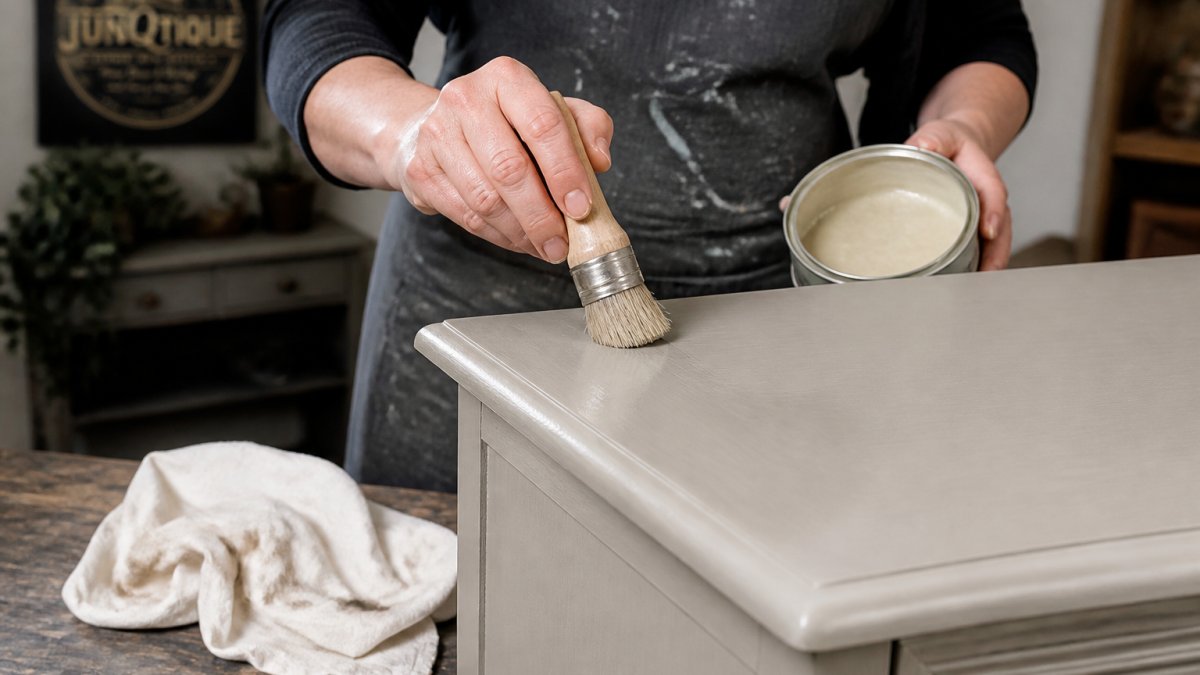
Start with a small amount of wax on the brush. Rub it into the surface, then move to the next area.
Work in sections so you do not lose track of where you have been. Overlap each pass slightly for even coverage.
Choosing Your Wax Brush and Working in Thin Coats
A dedicated wax brush makes the biggest difference here. Natural-bristle wax brushes hold the wax and push it into the paint's texture.
- Use a round or oval wax brush sized to your project
- Keep a lint-free cloth nearby for buffing
- Load the brush lightly, then add more as needed
- Work one section at a time
What most guides miss: too much wax is a bigger problem than too little. Excess wax sits on top, stays tacky, and takes far longer to cure.
How Long to Wait Between Coats of Chalk Paint® Wax
Wait about 15 to 30 minutes between wax coats, or until the first coat feels dry to the touch.
Press a clean finger lightly on the surface. If it feels cool and slightly tacky, give it more time.
For a second coat, use the same thin application. There is no need to buff between coats unless the surface feels uneven.
- First coat: let it dry 15 to 30 minutes
- Second coat: apply the same way, then let it dry
- Final buff: after the last coat feels dry
A common mistake is rushing the second coat.
How to Buff Chalk Paint® Wax Once It Feels Dry
Buff the wax with a clean, lint-free cloth once it feels dry to the touch, usually after 15 to 30 minutes.
Use light pressure and small circles. Work over the whole surface, then switch to a clean part of the cloth for the final pass.
Buffing does two things. It smooths the finish and it pushes the wax into the paint for better adhesion.
If the cloth comes away greasy, you applied too much wax. Wipe off the excess and buff again with a clean cloth.
What Happens If You Put Too Much Wax on Chalk Paint®
Too much wax leaves a tacky, sticky surface that can stay soft for weeks. It also attracts dust and shows fingerprints easily.
The fix is simple but takes patience. Wipe off the excess with a clean cloth, then buff the surface again.
Watch for these signs of excess wax:
- The surface feels greasy hours after application
- Fingerprints show up easily
- The finish looks uneven or blotchy
- Dust sticks to the surface
Thin coats are always the safer choice. You can add more wax later, but removing too much is harder.
What Affects Drying and Curing Time: Temperature, Humidity, and Coat Thickness
Warm, dry rooms with good airflow speed up drying and curing. Cold, humid rooms slow both, sometimes by several days. The four factors below are the ones that matter most, and they interact, a thin coat in a cold room can still outpace a heavy coat in a warm one.
Temperature
Temperature matters most. Wax softens and spreads more easily in a warm room, so it goes on thinner and cures faster. In a cold room, it stiffens and sits on top of the paint, which means you tend to apply more to cover the same area, and more wax means a longer cure. Most practitioners find that a room in the low 70s Fahrenheit is the sweet spot.
Humidity
Humidity is the second factor. Damp air slows the evaporation that lets wax harden. On a humid summer day, a coat that would normally feel dry in 20 minutes may still feel tacky after an hour. Airflow helps move moisture away from the surface, so a fan moving air through the room, not blowing directly on the wet wax, can shorten both dry and cure time.
Airflow
Good ventilation does two jobs: it carries away solvent vapor and it keeps humid air from settling on the surface. A still, closed room is the worst case. Crack a window or run a fan on low, and keep the piece out of direct sun, which can soften wax rather than help it set.
Coat thickness
Coat thickness is the third factor, and the one you control most directly. A thin coat cures far faster than a heavy one. This is why we always recommend thin layers: you can add more wax later, but a heavy coat that stays tacky for weeks is hard to fix.
| Factor | Speeds Up Cure | Slows Down Cure |
|---|---|---|
| Temperature | Warm room (low 70s°F) | Cold room (below 60°F) |
| Humidity | Dry air | Damp air |
| Airflow | Good ventilation, fan on low | Still, closed space |
| Coat thickness | Thin coats | Heavy coats |
Clear wax vs. dark wax: does the color change the timeline?
This is the question most guides skip. Clear and dark Annie Sloan waxes share the same base and the same dry-to-touch window of roughly 15 to 30 minutes, but they behave differently in practice.
- Clear wax is the workhorse. It goes on thin, buffs to a soft sheen, and is the easiest to judge by feel because you can see the paint through it. Most pieces need one or two thin coats, and cure time follows the standard 5-to-21-day range.
- Dark wax is pigmented and is usually applied over a clear coat rather than directly onto the paint. Because it is worked into the clear layer and then wiped back, the effective film is often thinner, but the pigment can mask the surface, making it harder to tell by eye whether the wax is dry. Use the finger test rather than sight. Dark wax also tends to show fingerprints and smudges more readily during cure, so keep handling to a minimum for the first several days.
- A practical rule: judge both waxes by touch, not by color. If the surface feels cool and slightly tacky, it needs more time regardless of which wax you used.
Dry vs. Cured: How to Tell the Difference and When to Use Your Furniture
Dry means the surface no longer feels wet or tacky. Cured means the wax has fully hardened all the way through, which takes 5 to 21 days. The practical question is not which word applies, it is what you are allowed to do with the piece at each stage. Here is the handling schedule we give customers at JunQtique.
A practical handling timeline
| Stage | Typical timing | What is safe | What to avoid |
|---|---|---|---|
| Just waxed | 0-30 minutes | Nothing, leave it alone | Touching, buffing, moving |
| Dry to the touch | 15-30 minutes | Light buffing with a lint-free cloth | Pressing hard, stacking, dragging |
| First 24 hours | 1 day | Careful moving with clean hands, light dusting | Setting objects down, sliding items, water spills |
| Early cure | 2-5 days | Light, infrequent contact | Daily use, heavy objects, heat, harsh cleaners |
| Mid cure | 5-14 days | Normal light use on low-traffic pieces | Hot mugs, prolonged moisture, abrasive cloths |
| Full cure | 14-21 days | Normal daily use | Nothing beyond ordinary care |
The upper end of that range is not a scare tactic. A thick coat in a cool, damp room can genuinely take the full three weeks. A thin coat in a warm, dry room with airflow often feels hard within a week. Treat the table as a default and adjust for the factors covered in the next section.
How to tell whether wax is dry or cured
Use two simple checks, in this order:
- The finger test (dry): press a clean fingertip lightly on the surface. Dry wax feels smooth and cool, not sticky. If your finger leaves a faint print that fades, it is dry but not cured.
- The fingernail test (cured): press a fingernail gently into an inconspicuous spot, such as the underside or the back edge. If it leaves a visible dent or mark, the wax is still soft underneath. If the surface resists and springs back, it is curing well.
A third check is the smell test. Fresh wax has a distinct solvent odor. As the wax cures, that odor fades. A piece that still smells strongly of wax is usually still curing, even if it feels dry.
What is safe at each stage
- Dry to the touch: safe to move and lightly handle. Do not buff hard, stack pieces, or set anything on the surface.
- First 24 hours: keep the piece in a dust-free, warm room. Wipe any spills immediately with a dry cloth.
- Days 2-5: light, infrequent contact only. Avoid dragging objects across the surface and keep water off it.
- Days 5-14: normal light use on low-traffic pieces. Hot mugs, prolonged moisture, and abrasive cloths are still off-limits.
- Fully cured (14-21 days): safe for normal daily use. Once cured, the wax gives a protective finish that lasts.
Dry is not the same as done. Use the timeline above to decide what the piece can handle, and give Annie Sloan wax the full cure window before putting furniture back into daily use.
Conclusion
The hardest part of waxing furniture is waiting. Thin coats, a warm dry room, and a little patience will get you a finish that lasts.
At JunQtique, we stock professional-grade Chalk Paint® supplies, from wax brushes to soft wax, along with curated vintage pieces ready for your next project. Our team can help you pick the right products for the piece you want to refinish.
Frequently Asked Questions
How long does Annie Sloan wax take to dry before buffing?
Annie Sloan wax typically feels dry to the touch within 10 to 30 minutes after application, depending on temperature, humidity, and how thin your coat is. You can buff once the wax no longer feels wet or tacky and has a slight haze. Buffing too soon pulls wax off the surface; waiting too long makes it harder to buff to a sheen. Aim for the point where a light finger touch leaves no residue.
How long does Annie Sloan wax take to cure fully?
Full cure takes 5 to 21 days. During this window the wax hardens and reaches its final durability. You can handle pieces gently after 24 hours, but avoid heavy use, moisture, and stacking items on the surface until the cure period ends. Cooler temperatures and higher humidity push cure toward the longer end; warm, dry, well-ventilated rooms speed it up.
Can you apply a second coat of Annie Sloan wax?
Yes. Wait until the first coat feels dry to the touch, usually 10 to 30 minutes, then apply a second thin coat if you want extra protection or a richer sheen. For dark wax over clear, apply the clear coat first, let it dry, then work the dark wax in small sections and wipe back excess. Always keep coats thin; thick coats stay tacky and take far longer to cure.
What happens if you put too much wax on Chalk Paint?
Excess wax sits on the surface instead of soaking in, leaving a sticky, tacky feel that can attract dust and stay soft for days. Fix it by wiping the surface with a clean lint-free cloth to lift the surplus, then buff firmly once it dries. If it stays tacky, a very thin coat of clear wax worked in and buffed can help even it out. Thin coats always beat thick ones.